
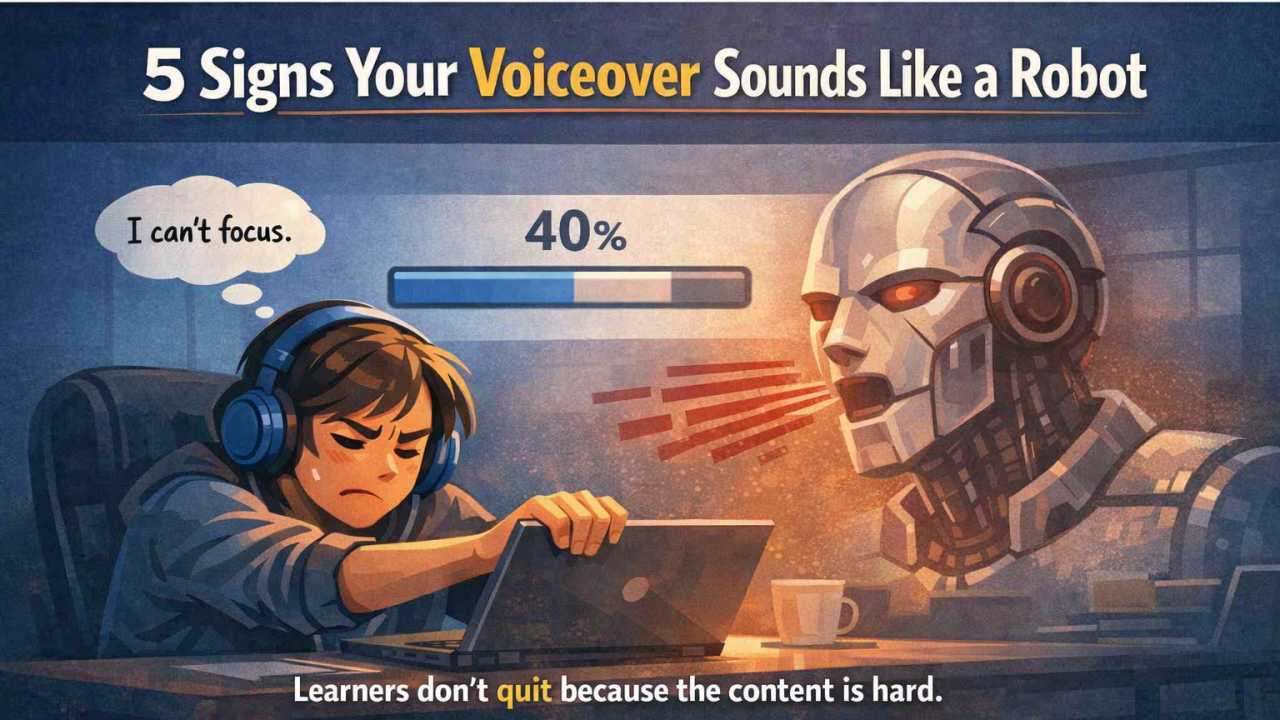
Learners Don’t Quit Because the Content Is Hard. They Quit Because the Experience Is Frustrating.
You’ve spent months building the perfect eLearning course.
The content is accurate. The visuals are engaging. The training has been translated into multiple languages. Interactive quizzes have been added, and every module has been carefully designed to meet learning objectives.
On paper, everything looks perfect.
Then the analytics arrive.
Course completion rates are lower than expected. Learners abandon modules halfway through. Assessment scores fail to improve, and engagement continues to decline.
Most organizations immediately blame the content.
Maybe the material is too complex. Maybe the course is too long. Maybe the assessments need improvement.
But there’s another factor that often gets overlooked:
The voiceover.
At WordPar, we’ve seen organizations invest heavily in eLearning localization, multilingual content development, and instructional design while treating voiceover as a final production step. Unfortunately, learners notice the difference.
A robotic, unnatural, or poorly directed voice can make even the most valuable training content difficult to follow. When learners struggle to listen, they struggle to learn.
The result is reduced engagement, lower knowledge retention, and training programs that fail to deliver their intended outcomes.
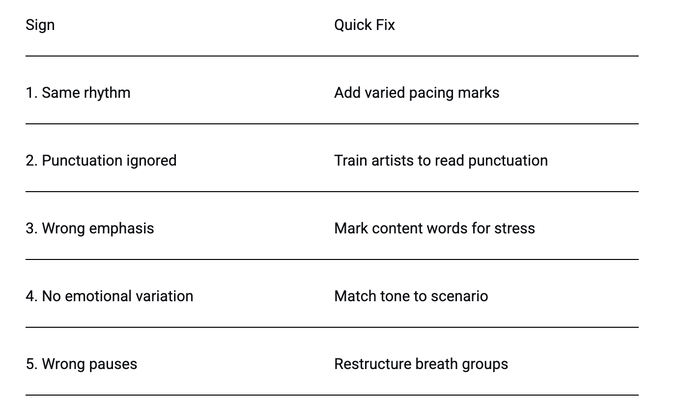
Here are five warning signs that your eLearning voiceover may be pushing learners away—and how professional voiceover services can help.
Sign #1: Every Sentence Sounds Exactly the Same
One of the most common issues in eLearning narration is a lack of variation in delivery. Every sentence is spoken at the same speed, with the same tone, and the same rhythm. The narration feels mechanical rather than conversational.
While learners may not immediately identify the problem, they quickly feel its effects. Human attention naturally responds to variation. We stay engaged when speech includes changes in pace, emphasis, energy, and rhythm. When those elements disappear, the content begins to sound repetitive.
Imagine listening to someone read a training manual aloud without changing their tone for ten minutes. Even if the information is valuable, maintaining focus becomes difficult.
This problem is particularly common in low-quality voiceovers and AI-generated narration that prioritizes accuracy over natural delivery.
Why It Matters
A monotone voice can reduce learner attention, increase mental fatigue, and make important concepts harder to remember. If learners stop actively listening, knowledge retention drops significantly.
How WordPar Fixes It
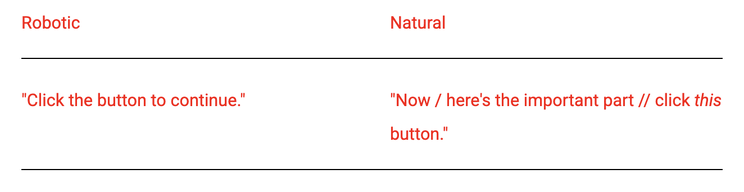
How WordPar fixes it: Our voiceover artists receive a marked-up script with:
- Bold for emphasis
- / for short pause
- // for longer pause
- Slower/faster indicators
Example
Sign #2: Punctuation Is Ignored
One of the easiest ways to identify an ineffective voiceover is by listening to how it handles punctuation.
Many narrators rush through scripts without respecting commas, periods, or natural pauses. Instead of sounding clear and conversational, the voice becomes one continuous stream of words.
Although learners may not consciously recognize the issue, they experience the consequences immediately. When punctuation is ignored, comprehension becomes harder. The brain has fewer opportunities to process information, organize ideas, and absorb important details.
Think about how people communicate in real life. Nobody speaks in one uninterrupted block of text. We pause. We breathe. We naturally separate ideas to help listeners understand what we’re saying.
Those pauses become even more important in training environments where learners are expected to understand procedures, policies, and technical concepts.
Example
Poor Delivery:
“First gather your materials then click start if you’re ready proceed to step two.”
Professional Delivery:
“First, gather your materials. Then click Start. If you’re ready, proceed to Step Two.”
The words haven’t changed, but the listening experience is dramatically different.
Why It Matters
Proper pacing improves comprehension, reduces cognitive overload, and helps learners retain information more effectively.
How WordPar Fixes It
Our voice talent is trained to treat punctuation as part of the performance. Commas create breathing points, periods signal transitions, and questions require natural intonation. This creates narration that sounds authentic and easy to understand.
Sign #3: Important Information Doesn’t Sound Important
Not every word in a sentence deserves equal attention.
Unfortunately, many voiceovers fail to distinguish between routine information and critical information. As a result, important instructions, warnings, and key learning points blend into the background.
Effective narration guides learner attention. It highlights the concepts that matter most and helps listeners understand what they need to remember.
Consider this example:
Less Effective:
“Do NOT press the emergency stop button.”
More Effective:
“Do not press the EMERGENCY STOP button.”
The wording is identical, but the impact is completely different.
In the second example, the learner immediately understands which part of the message is most important.
Why It Matters
Proper emphasis improves clarity and strengthens retention. Learners are more likely to remember information that stands out.
This becomes especially important in:
- Workplace safety training
- Compliance programs
- Healthcare education
- Technical instruction
- Manufacturing procedures
How WordPar Fixes It
Every project includes detailed voice direction that identifies critical terms, key actions, warnings, and learning objectives. This ensures that important information receives the attention it deserves.
Sign #4: The Emotional Tone Doesn’t Match the Scenario
Imagine listening to a workplace safety scenario narrated with the same enthusiasm as a vacation advertisement.
Or hearing an angry customer complaint delivered in a cheerful, upbeat voice.
The mismatch feels strange because it is strange.
One of the biggest mistakes in training narration is using the same tone for every situation regardless of context.
Different learning scenarios require different emotional approaches. A compliance course should sound authoritative. Customer service training should feel warm and empathetic. Leadership development programs should inspire confidence.
When narration fails to match the situation, learners struggle to connect with the content.
Why It Matters
Emotion plays a significant role in learning and memory. People remember information more effectively when it creates an emotional connection.
When voiceover delivery matches the scenario, learners become more immersed in the training experience and are more likely to retain the information later.
How WordPar Fixes It
We select voice talent based on more than language and accent. Emotional range is a critical part of the selection process.
Whether the training requires authority, empathy, urgency, or motivation, we ensure the voice supports the learning objective.
Sign #5: The Pauses Are In the Wrong Places (Or Missing Entirely)
What you hear: “To complete the process / you must first / select the file / then click upload.”
Breaks in the middle of phrases. Painful.
What learners feel: Cognitive load spikes. They have to reassemble the sentence themselves.
The fix: Pause at phrase boundaries, not random intervals.
How WordPar fixes it: We restructure scripts before recording to ensure natural breath groups.
Wrong pauses: “To complete / the process you / must first select / the file then / click upload.”
Right pauses: “To complete the process // you must first select the file // then click upload.”
Bonus: AI Voice vs. Human Voice — When to Use Which?
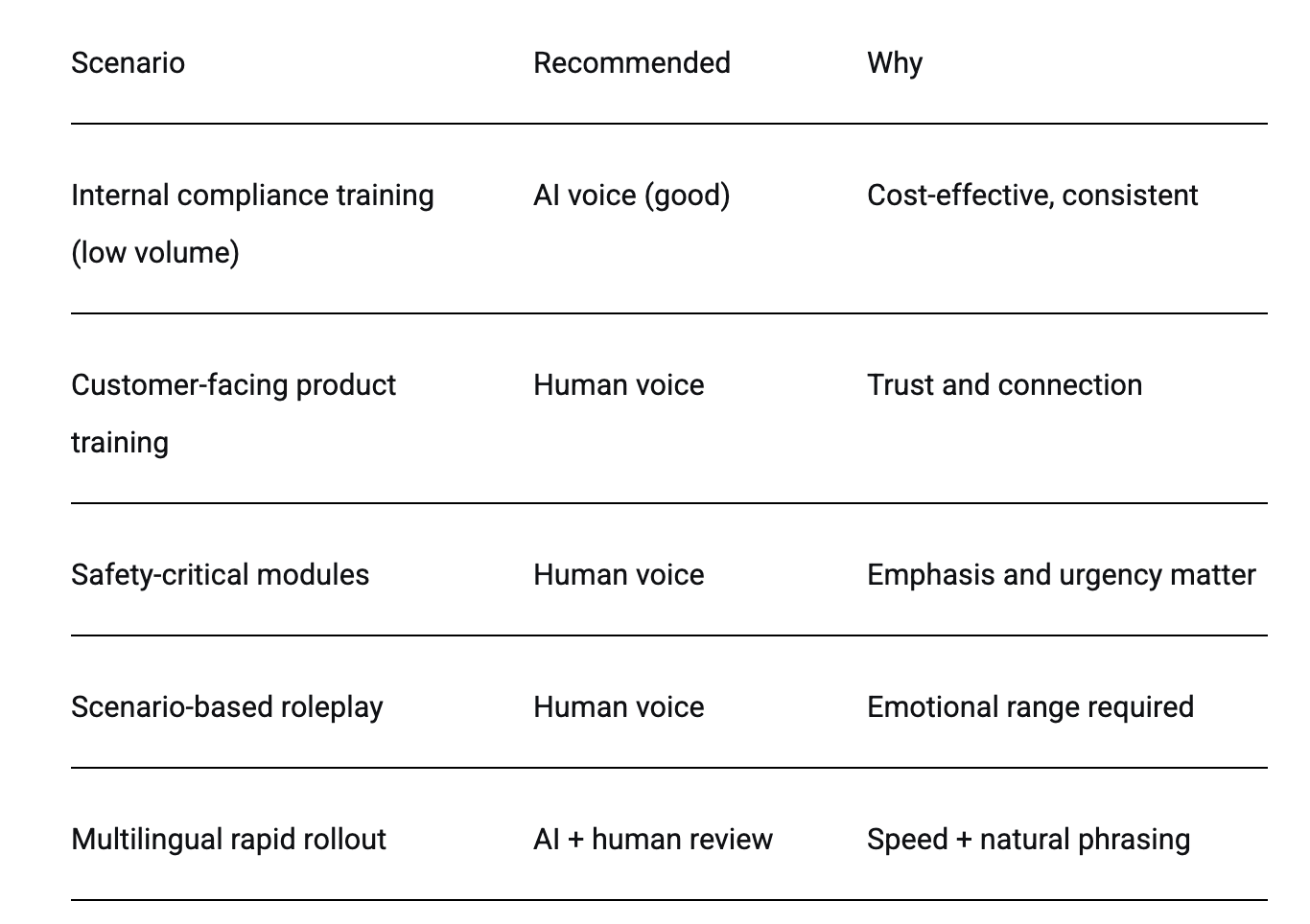
Why It Matters
When learners connect with the narrator, they remain engaged for longer periods and absorb more information.
When the voice feels artificial, attention decreases and motivation declines.
How WordPar Fixes It
Our professional voice artists bring personality, emotion, and cultural understanding to every project. They don’t simply read words—they communicate ideas in a way that resonates with learners.
Why Multilingual Voiceovers Matter
For global organizations, voiceover quality becomes even more important.
Many companies focus exclusively on translation accuracy, assuming that translated content automatically creates a successful learning experience.
It doesn’t.
True eLearning localization goes beyond translating words. It requires native-speaking voice talent who understand local pronunciation, cultural nuances, and audience expectations.
Employees are more likely to engage with training when it sounds natural and familiar.
Professional multilingual voiceover services help ensure that learners receive the same high-quality experience regardless of language or location.
The Real Cost of Poor Voiceovers
Poor narration doesn’t just create an unpleasant listening experience.
It impacts business results.
Lower engagement leads to lower completion rates.
Lower completion rates lead to weaker knowledge retention.
Weaker retention leads to reduced compliance, increased retraining costs, and lower overall training effectiveness.
Organizations invest significant resources into training development. Professional voiceover services help protect that investment by ensuring learners remain engaged from beginning to end.
Final Thoughts
Learners rarely abandon training because the content is difficult.
More often, they abandon it because the experience becomes difficult.
A robotic voice can undermine months of instructional design work. A professional voiceover can transform the way learners engage with your content.
If your training programs struggle with completion rates, engagement, or knowledge retention, don’t just review the course material.
Listen to the voiceover.
The problem may not be what you’re teaching.
It may be how it’s being delivered.
At WordPar, we help organizations create engaging multilingual learning experiences through professional eLearning voiceover services, training localization, and native-language narration.
Because successful training isn’t just about what learners read.
It’s about what they hear—and whether they want to keep listening.