
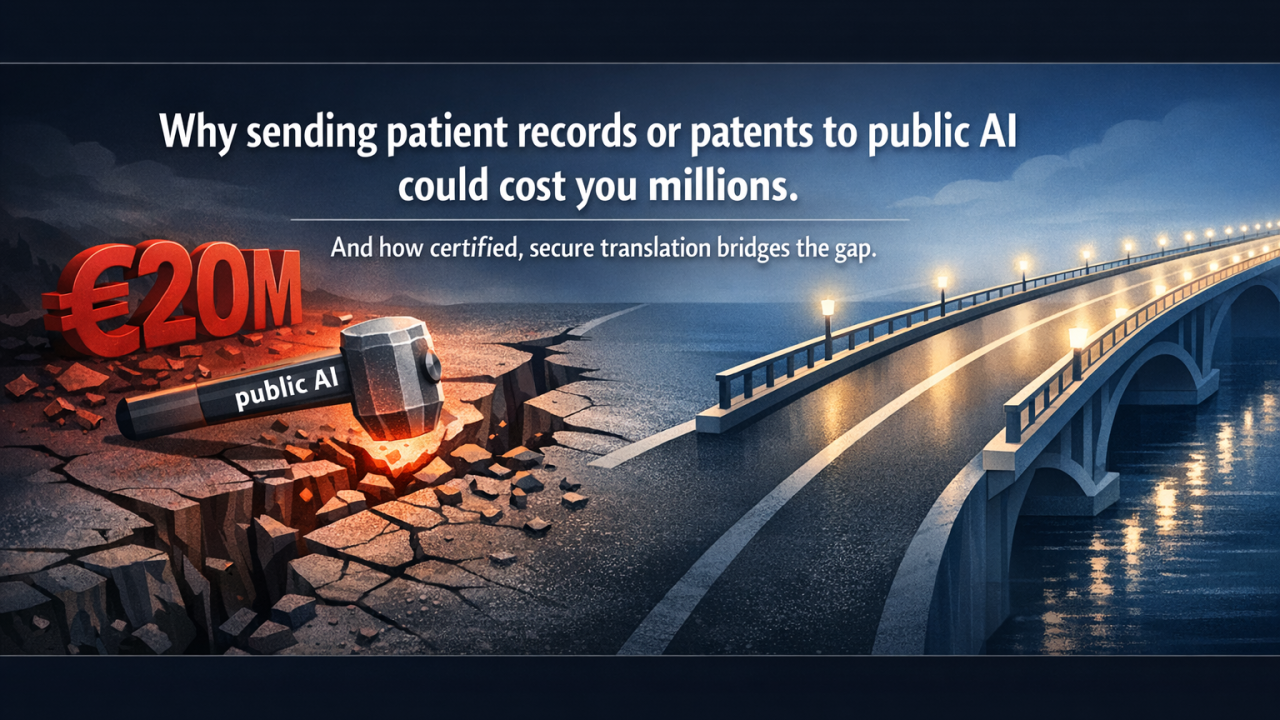
Why sending patient records or patent filings to public AI clouds could cost you millions — and how certified, secure translation bridges the gap. Introduction (The Paradox)
You need translation fast. AI promises seconds, not days.
But your document contains:
- A pharmaceutical patent (worth $50M)
- Employee social security numbers (HR verification)
- Confidential legal discovery (case-losing if leaked)
You cannot upload this to ChatGPT, DeepL, or Google Translate. Their terms of service? They may use your data for model training.
The paradox:
The clients who need speed the most can least afford to use public AI.
At WordPar, we solve this every day. Not by choosing AI or security. But by building secure AI into certified workflows.
The Real Risk (Not Hypothetical)
Case 1: Pharma A clinical trial report (anonymized) was uploaded to a public AI translation tool by a junior associate. The tool’s terms allowed data retention for “service improvement.” That report contained unblinded patient data.
Potential fine under GDPR/ HIPAA: €20M or 4% of global revenue.
Case 2: Legal A law firm used a public AI to translate discovery documents from Spanish to English. The AI provider suffered a breach. Opposing counsel requested logs. The firm had to disclose that documents were sent to a third party without client consent.
Result: Case dismissal motion filed.
Case 3: HR An international company translated employee verification letters using a free online tool. Those letters contained passport numbers and home addresses. The tool’s data retention policy was buried in fine print.
Result: Employee lawsuit for data mishandling.
ISO 27001: The Gold Standard (And Why It Matters)
ISO 27001 is the international standard for information security management.
It requires:
- Encrypted data storage and transmission
- Strict access controls (who sees what)
- Regular security audits
- Breach notification protocols
- Employee security training
What ISO 27001 does NOT require: Slow translation.
Secure systems can be fast. But only if they are designed that way.
WordPar’s Secure AI Workflow (For Pharma, Legal, and HR)
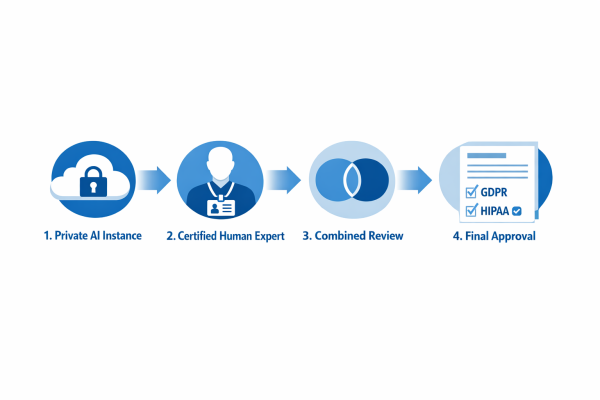
We do not use public AI APIs. We use private, audited, localized AI instances combined with certified human experts.
Step-by-step: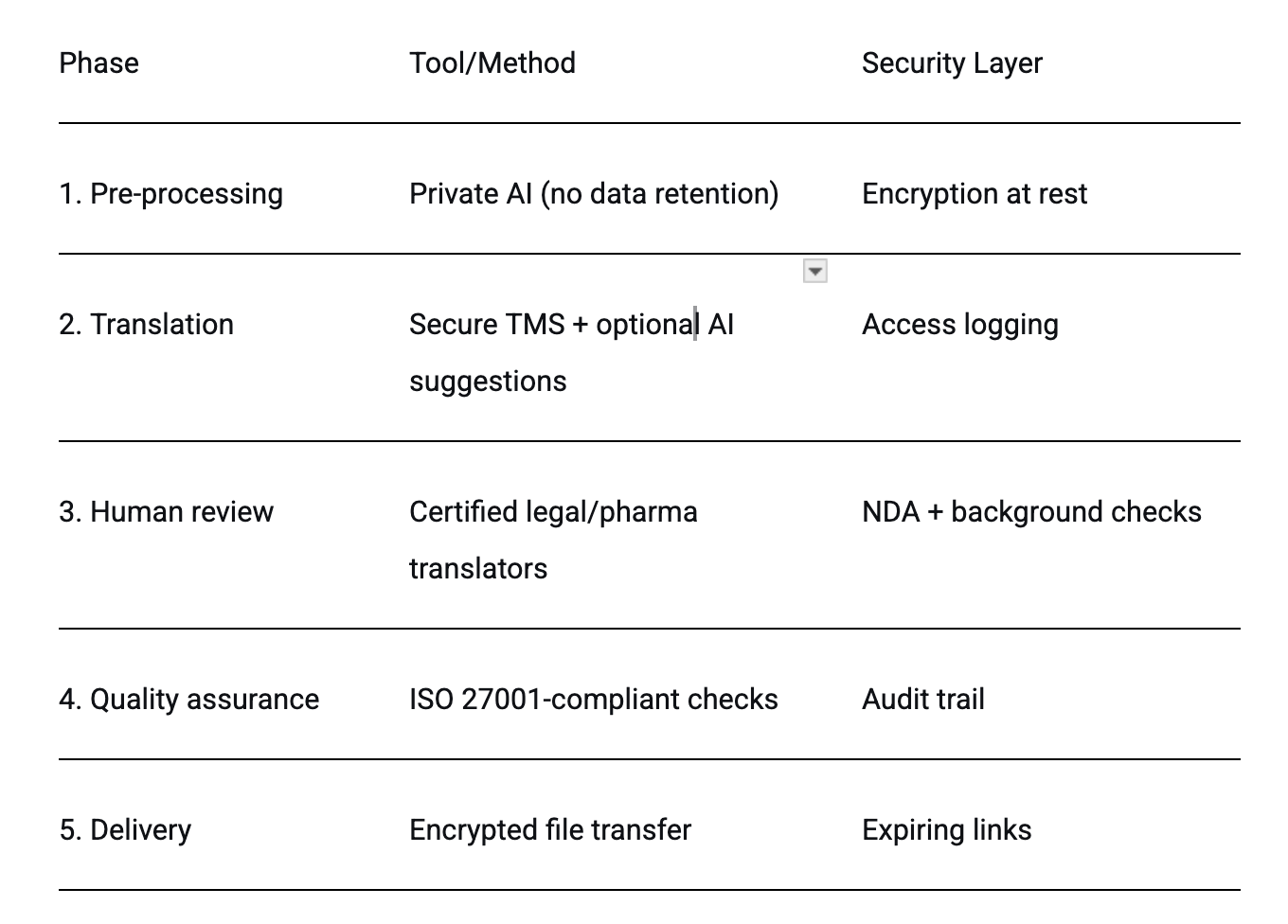
Result:
✅ AI speed for first draft
✅ Human accuracy for high-stakes content
✅ Full compliance with GDPR, HIPAA, and local data laws
When Can You Use AI? When Can You NOT?
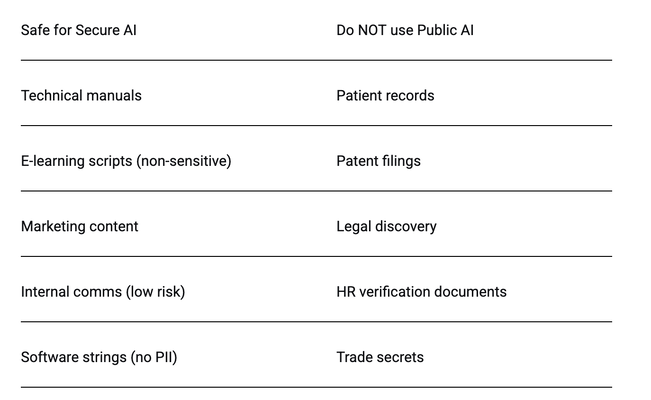
Rule of thumb: If it contains a name, a number that identifies a person, or a trade secret — do not put it into public AI.
The ROI of Secure Translation (For Compliance Officers)
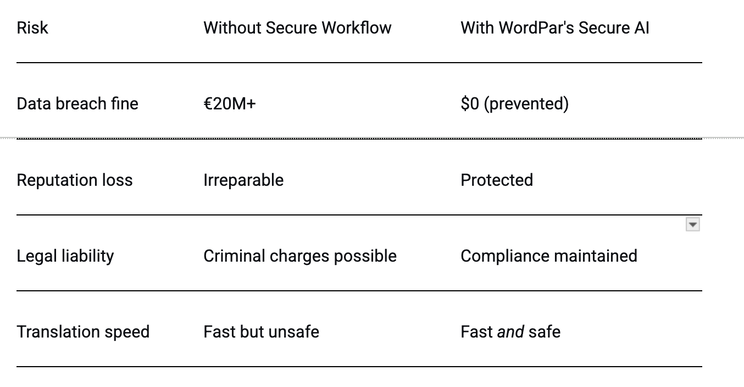
One stat to remember: According to IBM’s Cost of a Data Breach Report, the average cost of a data breach in 2025 was $4.88 million. A single translated document can trigger that.
What WordPar Offers (Explicitly)
✅ ISO 27001-compliant translation workflows (ask for our certificate) ✅ Private AI instances — no data leaves your control
✅ Certified legal and pharmaceutical translators (not generalists)
✅ HR verification translation with data masking options
✅ Audit-ready logs for every project
We do not say “AI is bad.” We say: “Use AI securely, or don’t use it at all.”