
Introduction: The Biggest Localization Myth
“We don’t need professional translation. Google Translate is good enough.”
We hear this from potential clients almost every week.
Then, months later, we receive a different call:
- “Our campaign failed in Brazil.”
- “Our German UI doesn’t fit the design.”
- “Our Spanish voiceover sounds unnatural.”
- “Our legal translation was rejected.”
The myths businesses believe about localization aren’t just misunderstandings—they’re expensive mistakes.
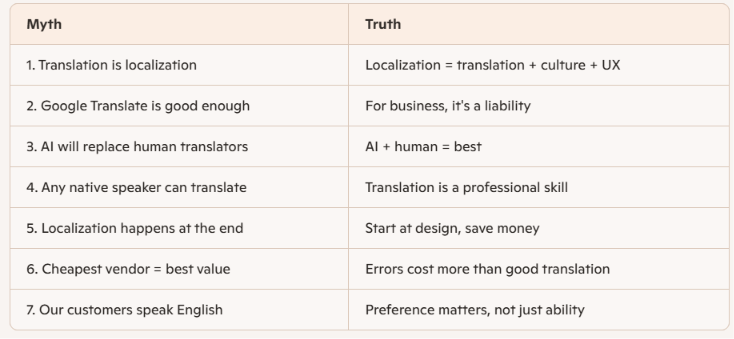
At WordPar, we’ve spent years helping companies recover from failed translations, localization issues, and international launch setbacks. Here are the seven biggest myths that continue to cost businesses time, money, and reputation—and the truth behind each one.
Myth #1: Translation Is the Same as Localization
The Myth
If you translate the words, you’ve localized the content.
The Truth
Translation is only one part of localization.
True localization adapts your content to suit the language, culture, expectations, and technical requirements of your target audience.
Localization includes:
- Language translation
- Layout and UI adaptation
- Date and time formats
- Currency conversion
- Cultural references
- Images and graphics
- Local regulations
- User testing

Real Example
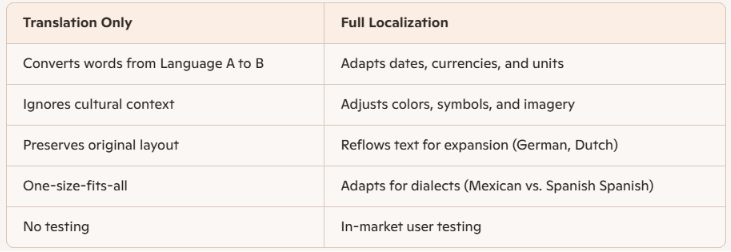
A U.S. company translated its website into Japanese but kept the original English design. While Japanese text can sometimes be shorter than English, different line-breaking rules and interface requirements caused major layout issues throughout the website.
Cost: Approximately $15,000 in redevelopment.
WordPar Solution
At WordPar, we don’t simply translate content—we localize the complete user experience, ensuring your website, application, documents, and marketing materials feel natural in every market.
Myth #2: Google Translate Is Good Enough for Business
The Myth
Machine translation is free and instant, so why hire professional translators?
The Truth
Google Translate is excellent for understanding simple everyday information—but business communication demands far greater accuracy.
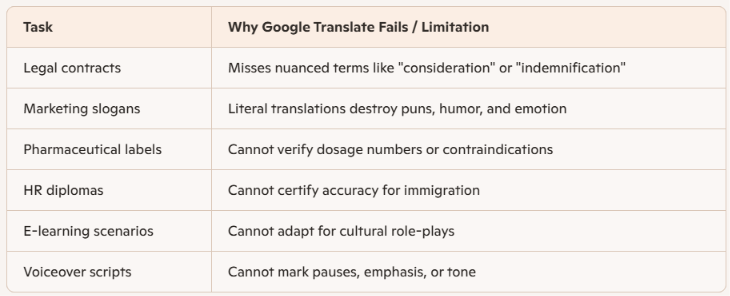
Professional translation is essential for:
- Legal contracts
- Marketing campaigns
- Pharmaceutical documentation
- E-learning materials
- HR documentation
- Technical manuals
Machine translation cannot reliably understand:
- Brand tone
- Cultural nuance
- Legal terminology
- Industry-specific language
- Emotional messaging
- Regulatory compliance
Real Example
A marketing email translated from English to Spanish used the phrase:
“We value your business.”
The translated version sounded more like evaluating the customer’s company rather than appreciating the customer relationship.
The result?
- Lower engagement
- Customer confusion
- Brand credibility loss
WordPar Solution
We combine AI-powered translation with expert human review, delivering the speed of technology without sacrificing quality, accuracy, or cultural relevance.
Myth #3: AI Will Replace Human Translators
The Myth
Artificial intelligence will make human translators unnecessary within a few years.
The Truth
AI is transforming the translation industry—but it is a tool, not a replacement.
AI Performs Well For
- Technical documentation
- Repetitive content
- Internal documentation
- Initial translation drafts
- Large-volume projects
Human Experts Are Essential For
- Legal agreements
- Marketing campaigns
- Advertising copy
- Voiceover scripts
- Pharmaceutical documentation
- HR verification
- Certified translations
These require judgment, creativity, accountability, and cultural understanding—qualities AI still cannot fully replicate.
The Future
The future isn’t AI versus humans.
It’s AI working alongside professional linguists.
WordPar Solution
We leverage AI to improve efficiency while our language experts refine every project for precision, compliance, and natural communication.
Myth #4: Any Native Speaker Can Translate
The Myth
Anyone fluent in two languages can produce professional translations.
The Truth
Speaking two languages doesn’t automatically make someone a professional translator.
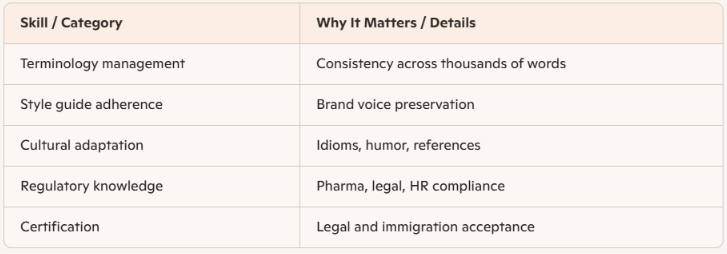
Professional translators possess:
- Translation methodology
- Subject matter expertise
- Terminology management
- Consistency across documents
- Quality assurance processes
- Industry certification
- Cultural adaptation skills
Real Example
A company asked a bilingual employee to translate its employee handbook into French.
The handbook used three different translations for “probation period,” confusing employees and creating HR inconsistencies.
Cost: Around $8,000 in revisions and redistribution.
WordPar Solution
We assign experienced translators with expertise in your industry—not simply fluent speakers.
Myth #5: Localization Happens After Development
The Myth
Finish building the product first, then localize it later.
The Truth
Localization should begin during product design.
Waiting until launch creates unnecessary costs and technical challenges.
Common problems include:
- Hard-coded text
- Broken layouts
- UI redesign
- Multiple rounds of testing
- Engineering delays
Real Example
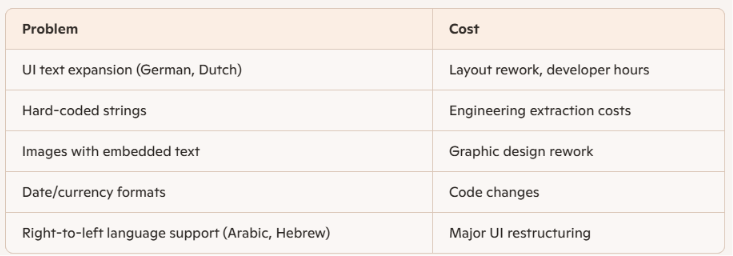
A software company built its application using hard-coded English text.
When expanding into eight new languages, developers had to manually rebuild large portions of the interface.
Cost: Approximately $50,000 in additional engineering work.
WordPar Solution
We help businesses internationalize products from the beginning, making future localization faster, easier, and more cost-effective.
Myth #6: The Cheapest Translation Vendor Offers the Best Value
The Myth
Translation is a commodity, so the lowest price wins.
The Truth
Cheap translation often becomes the most expensive option.
Hidden costs include:
- Legal disputes
- Brand damage
- Compliance failures
- Product recalls
- Customer confusion
- Marketing failure
- Rework and delays
Real Example
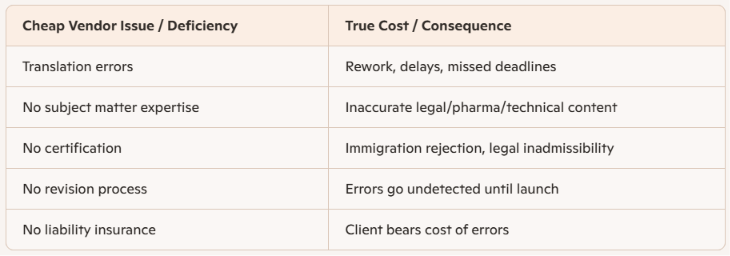
A company selected a low-cost legal translation provider charging $0.05 per word instead of WordPar’s $0.15 per word.
A critical indemnification clause was translated incorrectly.
The resulting legal dispute generated $40,000 in legal fees.
Initial savings?
Just $500.
WordPar Solution
We’re not the cheapest provider.
We’re the most cost-effective because quality translation prevents expensive mistakes.
Myth #7: Everyone Speaks English, So Localization Isn’t Necessary
The Myth
English is the global language of business.
The Truth
Many people understand English.
Far fewer prefer buying products or making decisions in English.
Customers overwhelmingly trust brands that communicate in their native language.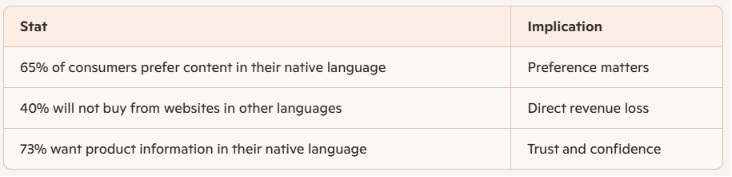
Real Example
A SaaS company launched in Germany using only English-language content.
A competitor entered the market with:
- German website
- German support
- German marketing campaigns
Within 18 months, the localized competitor captured nearly 70% of the market.
The English-only company lost significant growth opportunities.
WordPar Solution
We help businesses prioritize the right markets, identify the highest ROI opportunities, and localize strategically rather than translating everything at once.
Localization ROI Calculator (Simple Example)
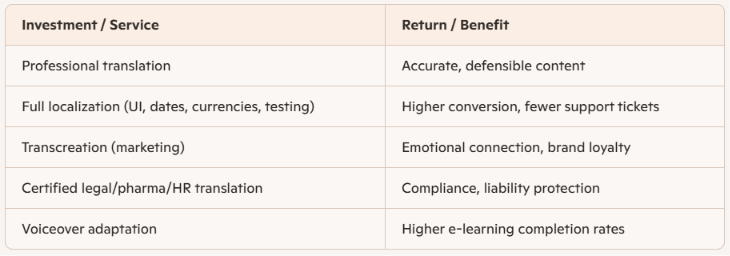
Imagine:
- Annual international revenue: $500,000
- Estimated localization investment: $20,000
- Revenue increase from better localization: 25%
Result
Additional international revenue:
$125,000
Minus localization investment:
$20,000
Estimated Return
$105,000 in additional revenue
Professional localization is not simply a business expense—it is an investment that helps unlock global growth.
Industry research consistently shows that companies investing in quality localization often experience 25–50% increases in international revenue, depending on their market and expansion strategy.
WordPar’s Promise
At WordPar, we don’t believe in shortcuts—we believe in delivering localization that helps businesses succeed globally.
Our commitment includes:
- Precision for legal, pharmaceutical, HR, and technical documentation
- Creativity for marketing, advertising, transcreation, and multimedia projects
- Compliance for immigration, courts, regulatory bodies, and certified translations
- Partnership by supporting localization from the design stage through global launch
We’re not focused on being the cheapest provider.
We’re focused on being the partner that delivers lasting value through accuracy, consistency, and cultural expertise.