

The Death of "Price Per Word": Why Outcome-Based Localization is the Future
SUMMARY
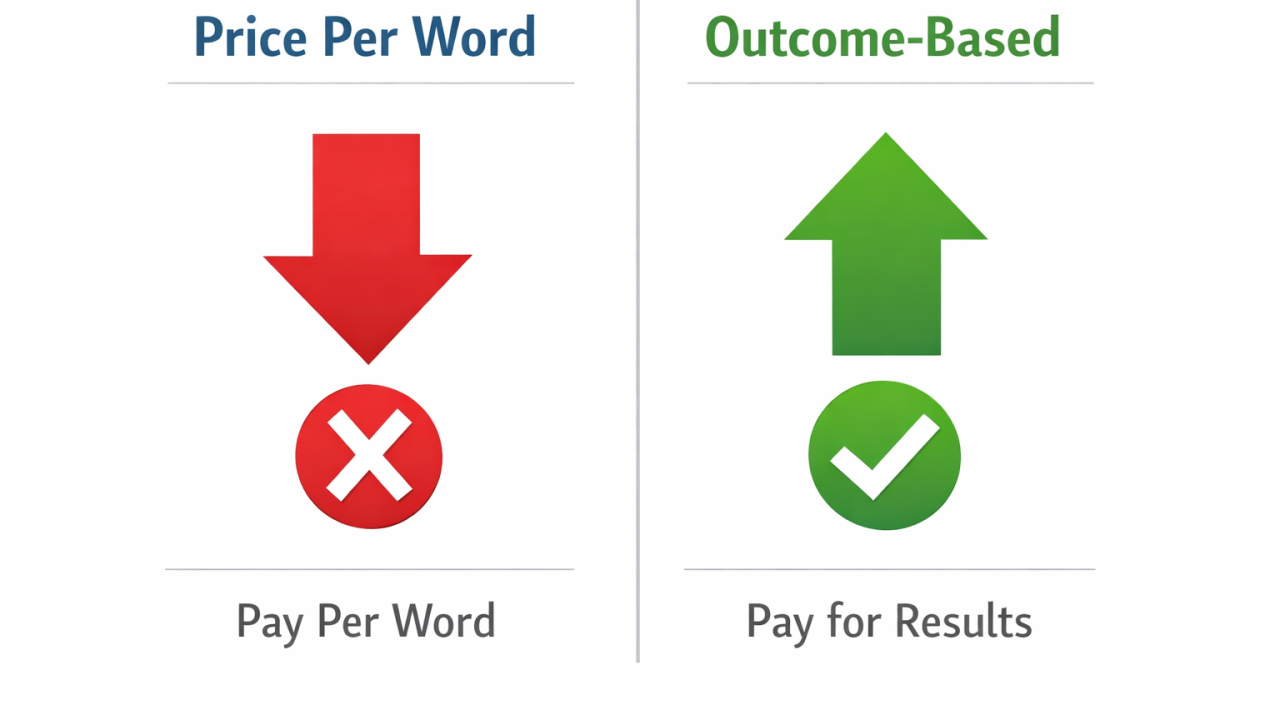
The traditional price-per-word model is failing as AI-powered translation reshapes localization. Outcome-based localization ties pricing to measurable business impact, including subscription, revenue-sharing, performance-based, or flat-fee models. For global businesses in legal, pharma, e-learning, and tech sectors, this approach ensures predictable budgets, quality-focused results, and risk mitigation. WordPar leads the shift by integrating AI, human expertise, and flexible pricing to deliver outcomes, not just translated words.
The Death of “Price Per Word”: Why Outcome-Based Localization is the Future
Why Price Per Word Is Becoming Obsolete
For decades, the localization industry has operated on a simple metric: price per word. It’s easy to understand and has formed the foundation of countless vendor-client relationships. But in 2026, this model is rapidly becoming obsolete.
The rise of AI-powered translation, neural machine translation, and large language models has fundamentally changed localization economics. AI can now process massive volumes of content faster and more affordably than traditional human translation. As the cost of translation drops, pricing models based purely on word count no longer make sense—for either client or vendor.
This has led the industry to embrace outcome-based localization, a model focused on delivering measurable business impact rather than simply counting words.
Why the Traditional Price Per Word Model Is Failing
The traditional per-word pricing model worked when translation was purely human. Each word required time, skill, and expertise. Today, however:
AI Handles Volume: Machine translation processes thousands of words in seconds. Charging per word for AI-generated output raises questions about value.
Quality Varies Dramatically: Translating a technical manual is very different from localizing a marketing campaign. Yet price per word treats all words equally.
It Rewards Inefficiency: The old model incentivizes maximizing word count rather than delivering meaningful business outcomes.
Clients Demand Accountability: Companies no longer want to pay for activity—they want results: higher conversion rates, faster time-to-market, and reduced risk.
What Is Outcome-Based Localization?
Outcome-based localization ties pricing to business results rather than content volume. Common models include:
Subscription or SaaS Models: Clients pay a recurring fee for access to a localization platform, AI tools, and a dedicated team—similar to enterprise software. This ensures predictable costs and unlimited scalability.
Revenue-Sharing Models: Vendors receive a percentage of revenue generated from localized content or markets, aligning incentives between client and vendor.
Performance-Based Pricing: Fees are tied to measurable outcomes like conversion rates, engagement metrics, or speed-to-market. Vendors share the financial risk if agreed-upon results aren’t met.
Flat-Fee Project Pricing: Vendors charge a flat fee for complete projects, such as localizing an entire website or launching a market. Focus shifts from word count to outcome.
How Outcome-Based Localization Benefits Clients
For WordPar’s clients in legal, pharmaceutical, e-learning, and technology sectors, the shift to outcome-based localization offers significant advantages:
Predictable Budgets: No surprises from fluctuating word counts or unexpected content.
Strategic Partnerships: Vendors become invested in your success, not just in selling more words.
Focus on Quality and Value: The emphasis moves from “how many words did you translate?” to “what business impact did we achieve?”
Risk Mitigation: Performance-based models give clients leverage and ensure vendors deliver results.
The WordPar Advantage
At WordPar, we embrace outcome-based localization as part of our core service philosophy. We don’t just sell translation services—we build strategic partnerships with our clients.
Our flexible pricing includes subscription-based access to hybrid AI-human platforms, outcome-driven engagements, and performance-tied services. With WordPar, you get more than a vendor—you get a partner invested in your global growth.