
Introduction
You’re launching a global campaign.
The creative is approved. The translation is perfect. The transcreation is tight. Then someone adds an emoji to the social caption. A harmless thumbs-up. A friendly waving hand. A cheerful OK sign. In 30 countries, those emojis mean something very different.
At WordPar, we have seen global brands lose deals, offend customers, and trigger PR crises — all because of a single emoji.
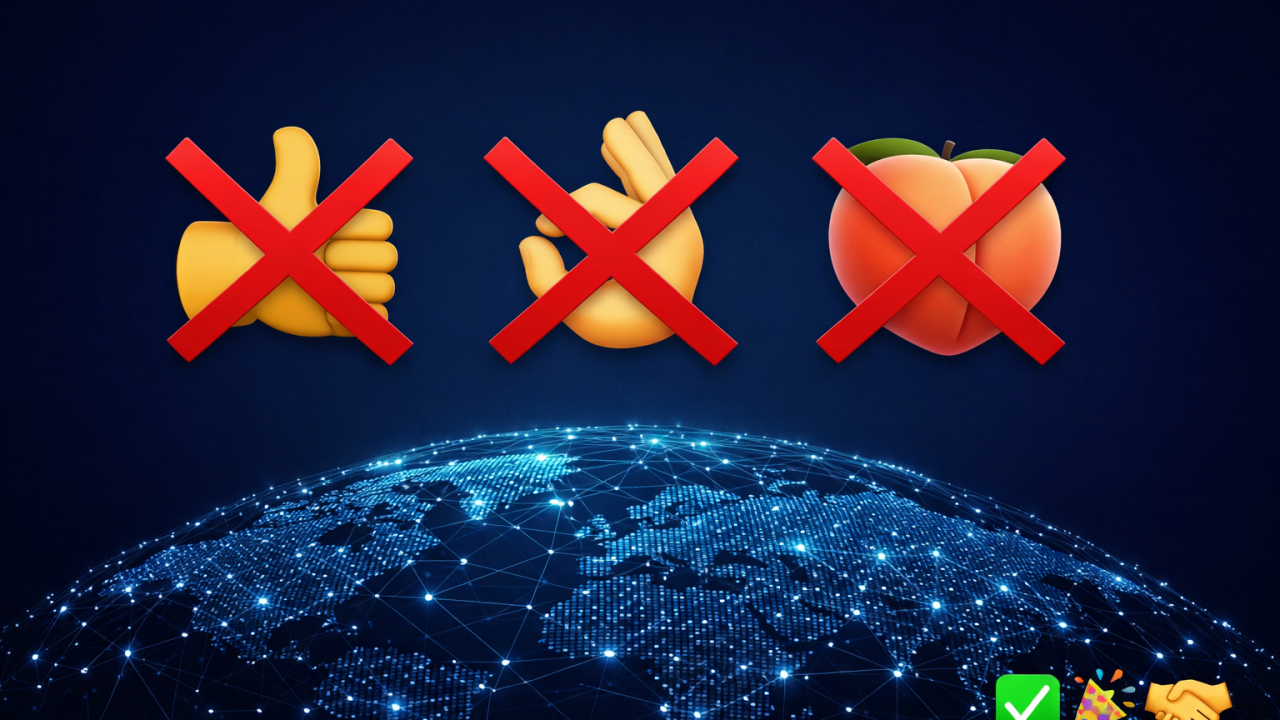
Here are the 3 most dangerous emojis in global marketing, what they really mean, and what to use instead.
The Rise of Emoji Localization (Yes, It’s a Thing)
Quick stat: Over 92% of the global online population uses emojis. But the same emoji can have completely different meanings across cultures.

Danger #1: The Thumbs-Up (👍

The number 1 (fine) — but thumbs-up to hitchhike is common, so context matters
Real example (anonymized): A European software company closed a deal with a Middle Eastern distributor. The European sales manager sent a follow-up email: “Great working with you! 👍”
The distributor went silent. The deal fell through.
Months later, the European company learned: In that culture, the thumbs-up emoji was seen as dismissive and disrespectful — as if the sales manager was saying “whatever” to a major contract.

Danger #2: The OK Hand Sign (👌)

Real example (anonymized): A global beverage brand ran a social media campaign featuring the OK hand sign. The campaign went live in Brazil.
Within hours, Brazilian users flooded the comments with outrage. The brand had accidentally used a vulgar insult in their primary campaign visual.
The brand pulled the campaign. They issued an apology. They lost three days of launch momentum in the 5th largest market by population.
Cost: Estimated $200,000 in lost launch revenue + PR damage.
Safe alternatives:

Danger #3: The Peach (🍑) and Eggplant (🍆)
What you think they mean: Peach = fruit, summer, health Eggplant = vegetable, cooking, purple
What they actually mean globally: In global internet culture (across most languages), these emojis are widely understood as:

This is not regional. This is global, across English, Spanish, Japanese, Arabic, and most digital cultures.
Real example (anonymized): A health food brand launched a campaign: “Summer is here — grab a peach 🍑”
The campaign was intended to promote fresh fruit. But the internet interpreted it very differently. The brand was mocked across social media for three weeks.
Cost: Embarrassment, lost credibility, and a forced campaign pull.
Safe alternatives for fruit/vegetable marketing:

Rule of thumb: If your marketing involves fruits or vegetables, ask yourself: “Could a teenager interpret this as something else?” If yes, change it.
The Emoji Localization Checklist (Printable)
Before you post globally, ask these 3 questions

These vary most across cultures
If you answer “yes” or “unsure” to any question: Replace the emoji with text or a universally safe alternative (✅ 🎉 🤝 🟢)
What About the “Prayer Hands” (🙏) Emoji

Verdict: 🙏 is one of the safest emojis globally. Use it freely.
Most translation vendors ignore emojis. We don’t.
For every global campaign, we provide:
✅ Emoji audit — reviewing every emoji in your creative against target market norms ✅ Local emoji recommendations — what to use instead ✅ Cultural notes — explaining why an emoji works or doesn’t ✅ Social media caption rewrites — preserving tone without risky symbols.