

TikTok, WeChat, and LinkedIn: Why Platform Choice is Your First Localization Decision
Global brands cannot rely on translation alone. This article explains why platform localization strategy is the first step in global marketing, covering TikTok, WeChat, LinkedIn, and regional platforms. Learn how social media localization, cultural adaptation, and platform-specific strategies help brands connect with international audiences.
TikTok, WeChat, and LinkedIn: Why Platform Choice Is Your First Localization Decision
Your Localization Strategy Is Flawed If It Starts With Translation
For years, the localization process followed a predictable pattern: create content in English, translate it into target languages, and distribute it across global channels.
This approach is fundamentally backward.
In 2026, successful brands understand that platform localization strategy should come before translation. The digital ecosystem changes dramatically from one market to another. The platforms dominating one country may have little influence in another.
A successful global expansion strategy is not about being everywhere. It is about being relevant where your audience already spends their time.
This is why social media localization has become a critical part of modern global marketing.
Why Platform Choice Comes Before Translation
Many companies assume localization simply means translating existing content into multiple languages.
However, each platform has its own:
- Content format
- Audience expectations
- Communication style
- Cultural behavior
- Engagement patterns
A LinkedIn article, TikTok video, and WeChat campaign cannot be localized using the same approach.
A successful content localization strategy requires understanding the platform first, then adapting the message accordingly.
The right question is not:
“How do we translate this content?”
The right question is:
“Where does this audience communicate, and how do they expect brands to speak?”
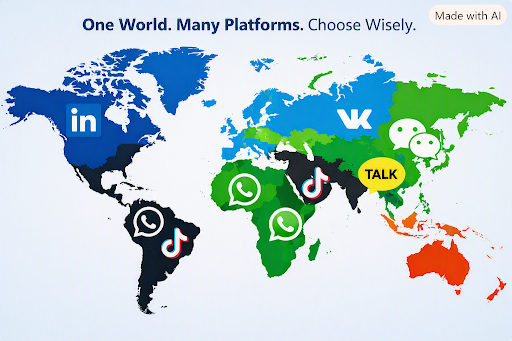
The Platform Landscape: A Global Snapshot
China: The WeChat Ecosystem
WeChat is not simply a messaging application. It has evolved into a complete digital ecosystem combining social media, payments, e-commerce, customer service, and business interactions.
For brands entering China, WeChat is not optional—it is essential.
WeChat localization requires more than translating posts. Brands must adapt to a platform where users expect integrated experiences, including:
- Mini-program experiences
- Customer communication
- Digital payments
- Community engagement
- Local purchasing behavior
A successful China WeChat localization strategy requires understanding how Chinese audiences interact with brands digitally.
Europe & North America: LinkedIn Dominates B2B
LinkedIn has become one of the most important platforms for professional communication and B2B marketing.
However, successful LinkedIn localization requires more than translating professional content.
Brands must adapt:
- Industry terminology
- Professional tone
- Leadership communication style
- Regional business expectations
A LinkedIn post that works in the United States may require a different approach for European audiences.
This is why LinkedIn localization strategy Europe requires cultural understanding, not just language conversion.
The Global Rise of TikTok
TikTok has transformed how brands communicate with younger audiences worldwide.
However, TikTok success depends heavily on cultural relevance.
A video format that performs well in the US may fail in Southeast Asia or Latin America because trends, humor, music, and storytelling styles differ.
Effective TikTok localization services include:
- Understanding local trends
- Adapting humor
- Using culturally relevant visuals
- Creating platform-native content
TikTok localization is not about translating a video.
It is about recreating the experience for a new audience.
Regional Social Media Champions
Global brands must also consider regional platforms that dominate specific markets.
Japan, Thailand, Taiwan
Line remains a major communication platform, especially for personal messaging and brand engagement.
South Korea
KakaoTalk plays a significant role in digital communication and customer interaction.
Russia
VKontakte (VK) remains an important platform for local audiences.
Latin America and India
WhatsApp is widely used for communication, customer support, and business interactions.
North America and Europe
Snapchat continues to maintain strong engagement among younger audiences.
Understanding these regional preferences is a key part of global brand localization.
The Commercial Reality for Global Brands
Choosing the right platforms is not only a marketing decision.
It is a localization decision.
Resource Allocation
Trying to localize content for every platform in every market is expensive and inefficient.
A focused international social media strategy helps brands invest resources where they create the highest impact.
Content Adaptation
Every platform has different expectations.
A LinkedIn article requires professional thought leadership.
A TikTok video requires entertainment and cultural relevance.
A WeChat campaign requires ecosystem integration.
This makes platform-specific localization essential.
Cultural Relevance
Brands that understand local platform behavior demonstrate cultural intelligence.
Customers trust brands that communicate naturally within their digital environment.
How WordPar Helps With Platform Localization
At WordPar, we help global brands navigate complex digital ecosystems through strategic localization.
Our approach includes:
Market Assessment
We analyze platform preferences based on your target audience, region, and business goals.
Platform-Specific Localization
We adapt content according to platform requirements, including:
LinkedIn professional content
TikTok short-form videos
WeChat campaigns
Regional social platforms
Integrated Global Strategy
We help businesses build a consistent global presence while adapting communication for local markets.
Our global marketing localization services help brands communicate effectively across languages, cultures, and platforms.
Frequently Asked Questions
What is platform localization?
Platform localization is the process of adapting content, messaging, and user experience for specific digital platforms and regional audiences.
Why is social media localization important?
Social media localization helps brands communicate in culturally relevant ways, increasing engagement, trust, and conversions.
Which social media platform should brands use globally?
The right platform depends on the target market. WeChat is essential in China, LinkedIn dominates B2B markets, and TikTok is powerful for global consumer engagement.
How do brands localize content for different platforms?
Brands adapt content formats, tone, visuals, language, and cultural references based on each platform’s audience expectations.
Conclusion
The future of global marketing is not about translating the same message everywhere.
It is about understanding where people communicate and how they expect brands to engage.
A successful platform localization strategy begins before translation. It requires cultural intelligence, market understanding, and platform-specific adaptation.
At WordPar, we help brands choose the right platforms, adapt their content, and create meaningful connections with audiences worldwide.
The right platform.
The right language.
The right audience.
That is what makes global localization successful.
WhatsApp us