

The "Uncanny Valley" is Dead: How AI Lip-Syncing is Revolutionizing Video Localization
SUMMARY
AI lip-syncing uses neural rendering to match speakers’ lip movements to translated audio, making dubbed videos indistinguishable from natively filmed content. This technology cuts video localization costs by 70–90% while enabling brands to deliver consistent multilingual video across global markets in hours instead of weeks.
The "Uncanny Valley" is Dead: How AI Lip Syncing is Revolutionizing Video Localization
Dubbed videos no longer look dubbed. Here's why that matters for every global brand.
AI lip syncing has transformed video localization from an awkward compromise into a seamless experience. For decades, brands faced an impossible choice: use subtitles (accurate but distracting) or dubbing (immersive but plagued by mismatched lip movements). The "uncanny valley" of traditional AI dubbing made localized content feel unnatural. Viewers knew they were watching a dub, and that undermined trust and engagement.
That era is over. Neural rendering and AI-powered lip-syncing have closed the gap between dubbed and natively filmed content. Today, an executive's keynote can look and sound like it was originally recorded in 15 different languages simultaneously. The result? Multilingual video that feels authentic in every market.
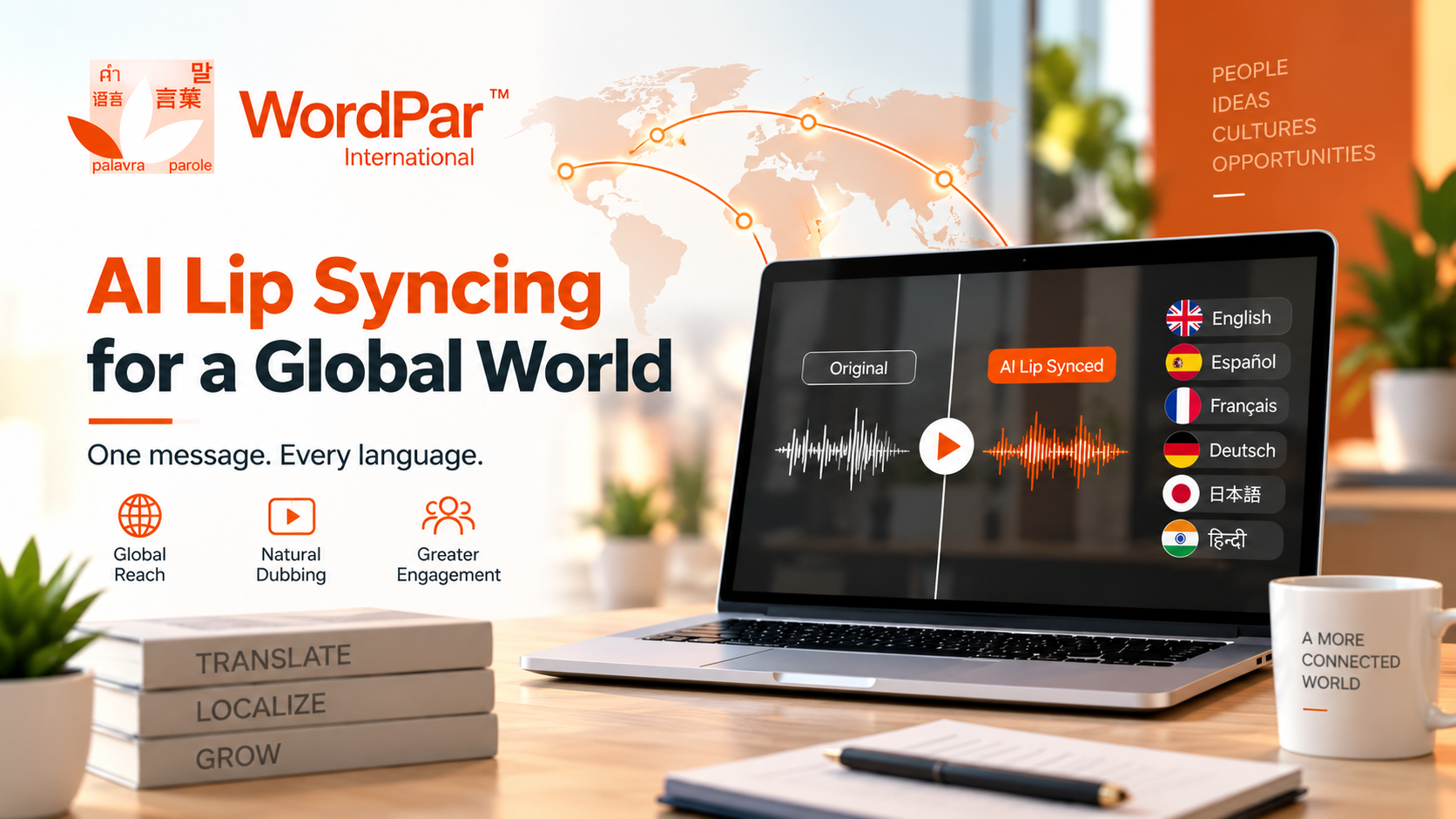
[IMAGE: featured — alt: "AI lip syncing technology creating natural multilingual video localization for global brands"]
What Is AI Lip Syncing and How Does It Work?
AI lip syncing technology uses deep learning to map translated audio waveforms to natural facial movements. The process involves four stages:
- Audio Analysis: The AI analyzes the translated audio track, identifying phonemes (the smallest units of sound in each target language). This powers accurate voiceover translation mapping.
- Facial Mapping: Advanced neural rendering maps each phoneme to the corresponding mouth shape and facial muscle movement specific to the speaker.
- Frame Synthesis: The AI synthesizes new video frames, seamlessly altering the speaker's lip movements to match the translated audio, pixel by pixel.
- Final Rendering: The output is a multilingual video where the speaker appears to be naturally speaking the target language. Modern systems handle complex scenarios including fast camera movements, low lighting, and multiple speakers on screen.
The technology has matured rapidly. In 2026, AI dubbing costs between $2 and $20 per minute, compared to $500 to $2,000 per minute for traditional studio dubbing. That represents a 70 to 90% cost reduction with turnaround times measured in hours, not weeks.
Why Does AI Lip Syncing Matter for Global Brands?
The benefits of AI lip syncing extend far beyond cost savings. Here is why this technology is reshaping video localization strategy:
| Benefit | Traditional Dubbing | AI Lip Syncing |
|---|---|---|
| Viewer Experience | Mismatched lip movements distract viewers | Natural synchronization keeps viewers immersed |
| Brand Consistency | Different voice actors per market | Same speaker identity across all languages |
| Cost per Minute | $500–$2,000 | $2–$20 |
| Production Time | 2–6 weeks per language | Hours per language |
| Scalability | Linear cost increase per language | Near-zero marginal cost per additional language |
English speakers represent only about 17% of the global population. For any brand with international ambitions, video translation is no longer optional. AI lip syncing makes it economically viable to localize into dozens of languages at once.
How Is AI Lip Syncing Transforming E-Learning Localization?
E-learning localization is one of the sectors where AI lip syncing delivers the greatest impact. Training videos can now be localized for global workforces with consistent visuals and immersive audio. Learners feel more engaged when the instructor appears to be speaking their native language, which directly improves knowledge retention and completion rates.
Key applications include:
- Corporate Training: Onboarding, compliance, and skills development videos localized consistently across every regional office using AI-powered translation.
- Pharmaceutical Training: Medical and clinical training videos localized with precision, ensuring critical information is conveyed clearly and professionally in every language.
- Executive Communications: Keynotes, investor presentations, and town halls delivered in each market's language with the same speaker identity and visual authority.
- Marketing Video: Brand videos, product demonstrations, and social media content localized for international audiences without compromising visual quality or brand identity through video translation.
What Should You Look for in an AI Lip Syncing Provider?
Not all video localization providers deliver the same quality. When evaluating an AI lip syncing partner, look for these capabilities:
- Neural Rendering Quality: The provider should handle multiple speakers, varied lighting, and camera movement without visual artifacts.
- Voiceover Translation and Adaptation: Translated voiceovers must be linguistically accurate, culturally resonant, and emotionally appropriate for the target audience.
- Human-in-the-Loop Review: The best results combine AI-powered translation with human expert review for tone, cultural nuance, and emotional prosody.
- Subtitling Services: For audiences that prefer subtitles, the provider should offer accurate, culturally adapted captions alongside AI dubbing.
- Full-Service Production: From script adaptation and voiceover translation to final rendering, a single partner should manage the entire video localization workflow.
The WordPar Advantage in AI Dubbing and Video Localization
At WordPar, we combine advanced AI lip syncing with deep linguistic expertise to deliver multilingual video that sounds and looks native in every target language. Our video localization services include:
- AI Lip Syncing: Advanced neural rendering technology that creates natural, synchronized video across 80+ languages.
- Voiceover Translation and Adaptation: Native-speaking linguists ensure every voiceover is linguistically accurate and culturally resonant.
- Subtitling Services: Accurate, timed, and culturally adapted subtitles for audiences who prefer reading along.
- E-Learning Localization: End-to-end localization of training content including video, assessments, and interactive modules.
- Full-Service Production: Script adaptation, voiceover casting, AI dubbing, quality assurance, and final delivery, all managed under one roof.
Our ISO 27001 certification ensures the highest standards of data security, an essential consideration when localizing sensitive corporate, pharmaceutical, and legal content.
Final Thoughts
The uncanny valley in video localization is dead. AI lip syncing has made it possible for any organization to deliver multilingual video that is authentic, engaging, and cost-effective. Whether you are localizing e-learning localization content for a global workforce or launching a video translation campaign for international markets, the technology is here to scale your message without compromise.
Your videos can now speak every language. The only question is how quickly you will start.
Frequently Asked Questions
AI lip syncing uses deep learning and neural rendering to alter a speaker's mouth movements in video so they match a translated audio track. The result is a localized video where the speaker appears to be naturally speaking the target language, eliminating the uncanny valley effect of traditional dubbing.
AI-powered translation and lip-syncing reduce costs by 70 to 90% compared to traditional dubbing. While professional studio dubbing costs $500 to $2,000 per minute, AI dubbing with lip-syncing typically costs $2 to $20 per minute, with turnaround times measured in hours instead of weeks.
Yes. Modern AI lip syncing technology handles complex scenarios including fast camera movements, low lighting, and multiple speakers. For corporate communications, e-learning localization, pharmaceutical training, and marketing video, the technology produces broadcast-quality results that are virtually indistinguishable from natively filmed content.
Ready to Make Your Videos Speak Every Language?
WordPar combines AI lip-syncing technology with human linguistic expertise to deliver natural, synchronized multilingual video. Let's discuss your project.
Get a Free Video Localization Quote →