🔍 What Is Literary Translation?
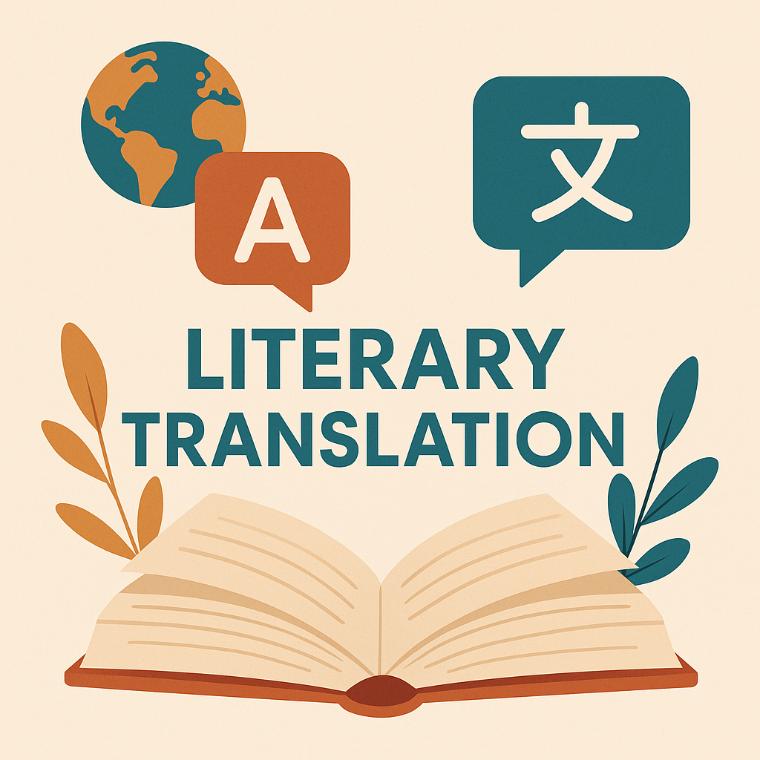
Literary translation involves converting works of literature — such as novels, poems, short stories, plays, and songs — into another language while preserving their cultural and emotional depth. Unlike business or technical translation, this form of translation focuses on artistic expression, tone, and nuance.
Key aspects include:
- Reproducing cultural meaning
- Maintaining literary devices like metaphor, rhyme, and irony
- Adapting idioms and regional references
⚠️ Why Literary Translation Is So Challenging
Unlike technical translation, where accuracy and terminology are key, literary translation deals with layered meanings and emotional undertones.
Here’s why it’s difficult:
- Idiomatic Complexity: Literary works are rich in metaphors, idioms, and figurative language.
- Cultural Sensitivity: References to traditions, customs, and historical context must be adapted for a new audience.
- Creative Integrity: Translators must choose between literal accuracy and preserving the emotional or stylistic impact.
📚 Translating Novels: The Soul of Storytelling
Novel translation demands not only fluency but also emotional intelligence and creative sensitivity. Literature portrays human emotions, relationships, and imagination — elements that don’t always have direct translations.
Common hurdles include:
- Reconstructing character voice and tone
- Translating humor, sarcasm, and irony
- Adapting culture-specific scenarios or references
💡 Example: A phrase that’s natural in Japanese storytelling may need a completely different narrative device in English to preserve its emotional weight.
📝 Translating Poetry: Beyond the Words
Poetry translation is one of the most demanding forms of literary translation. Every line, rhythm, and rhyme contributes to the poem’s essence.
Challenges include:
- Preserving meter, rhyme schemes, and sonorous effects
- Retaining the poem’s emotional resonance
- Avoiding over-interpretation or creative distortion
🧠 The translator walks a fine line — create too freely, and you lose the original; stay too literal, and you lose the poetry.
🎯 Creative vs Accurate: The Eternal Dilemma
The translator must constantly ask:
- Do I prioritize literal accuracy or reader impact?
- Should I adapt this reference for the target culture or keep the original context intact?
This is where transcreation often becomes the chosen path — a blend of translation and creative writing that preserves meaning, style, and intent.
🧠 Essential Skills of a Literary Translator
The best literary translators possess more than just bilingual fluency. They master the “5 Cs” of successful creative translation:
- Competence – Linguistic expertise in both source and target languages
- Creativity – Ability to reimagine ideas in culturally relevant ways
- Confidence – Trust in their interpretation and style choices
- Continuity – Consistency across long works
- Cultural Intelligence – Deep understanding of literary and cultural nuances
🌐 Why Choose Professional Literary Translation Services?
Hiring expert literary translation services ensures:
- Style-matched rendering of your literary voice
- Accurate translation of cultural and emotional subtleties
- Professional handling of publishing-ready content
Whether you’re translating a classic novel, children’s book, or poem collection — professional book translators ensure your story retains its soul across languages.
✅ Conclusion
Literary translation is both an art and a discipline. It demands passion, precision, and cultural sensitivity to craft words that resonate across borders. Whether it’s fiction, poetry, or drama — only expert literary translators can do justice to the original spirit while making it accessible to a global audience.