

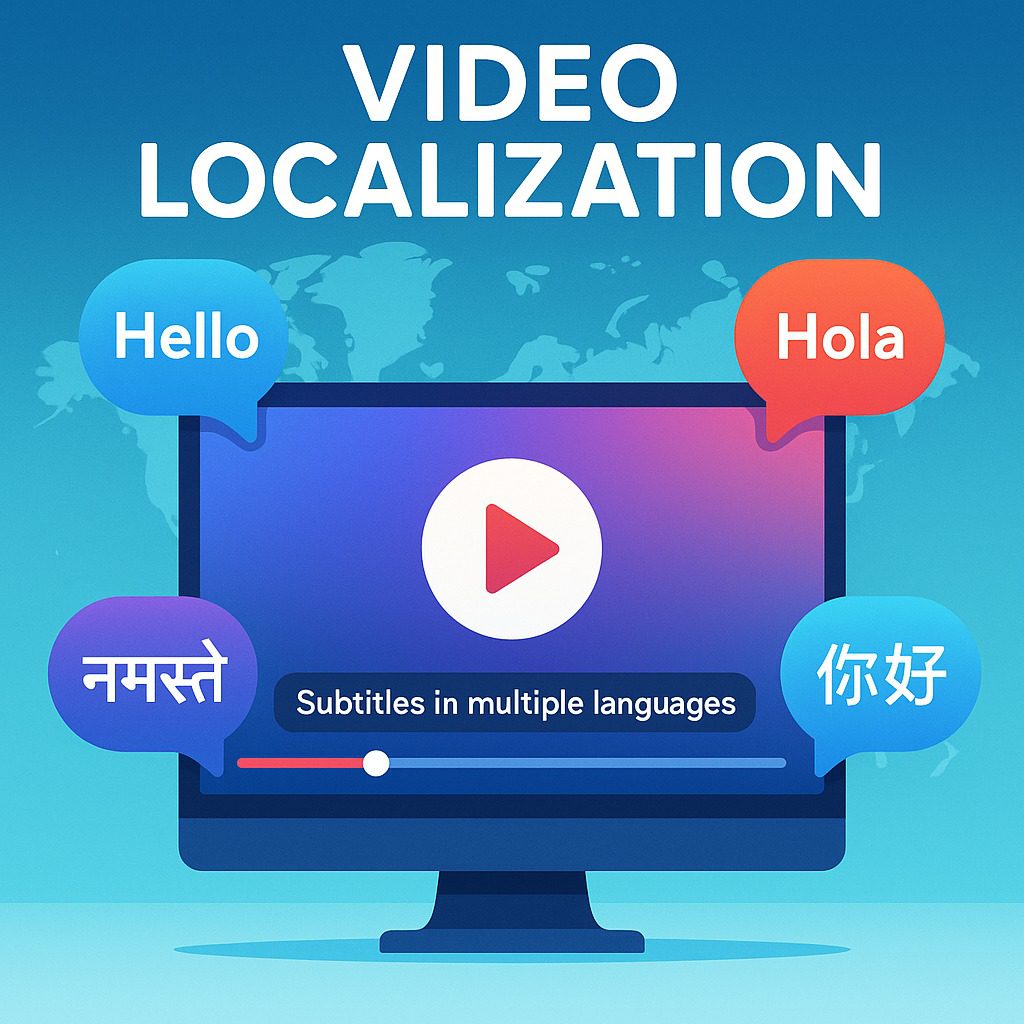
Video localization is the process of adapting video content from one language and culture to another. It involves translation of on-screen text as well as background audio, and the multimodal nature of such translation presents challenges and also scope for creative solutions.
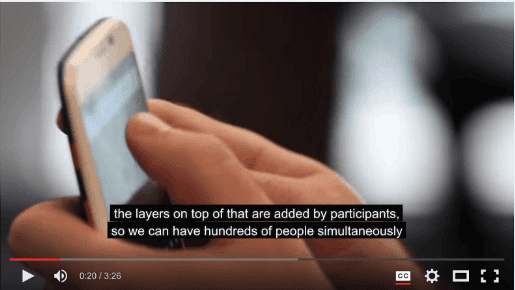
When translating the audio component of a video, there are two choices – one is to translate sound to text and the other sound to sound. The former is called subtitling whereas the latter is known as voiceover localization. Audio to audio can be further be either a plain narration or a dubbing. While the former is where the speaker is not visible on the screen or not part of the screenplay, whereas the latter is where we must match the spoken word with the speaker’s lip movements on the screen. Thus the word lip-syncing. Modern video localization services often integrate subtitling and voiceover translation to deliver a seamless viewer experience.
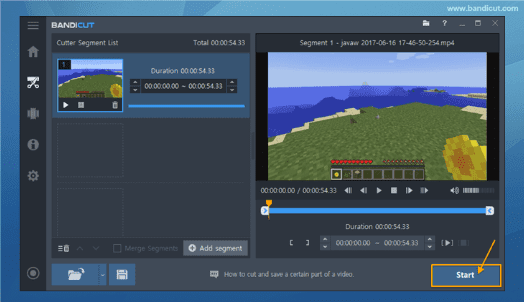
Localization of audio within a video will necessarily involve a few intermediary steps:
Many videos, especially advertisements, news clips and e-learning modules have a multimodal element. There may be written text already which is part of the presentation. Captions or words might appear in the fore- or background intermittently. In e-learning it might be the white board or a portion of the screen that displays diagrams and text. In such a case, we need to check with the developing team whether the entire display screen needs to be recreated. Translation of on-screen text is easy to provide, but there is more than translation involved in the localization of such videos. Providers of video localization services ensure that both text and design are aligned while also offering subtitling and voiceover translation where needed.
The caption may be an integral part of the design and appearance – so the new text needs to be integrated and the production may need to trace back a few steps. The producer needs to be informed about this aspect. Sometimes mere subtitles are sufficient for on-screen text – but sometimes it may involve much more work that goes beyond translation.

The fight for screen-space arises when both the audio and text components need to be subtitled. The result: on-screen clutter. This is a challenge that needs to be foreseen in the planning stage and requirement analysis. For this, it is important for an LSP (language service provider) to sensitize the client to multimodal translation and cross-modal localization. This is where video localization services ensure that both text and design are aligned while also offering video localization services. Subtitling and voiceover translation become critical elements of comprehensive subtitling and voiceover translation where needed.
The first step in that direction is to realize that language has two manifestations – the written and spoken. And in today’s multi-modal textual environment, there is use of both. And localization can involve
Often client representatives are unaware of the multimodality of video translation, what it entails and what is involved in the process. To this, the LSP plays an important role in educating the client and providing a comprehensive solution.
WordPar International is a leading language service provider providing video localization and film translation services to a worldwide clientele.