

Beyond Subtitles: How “Spatial Localization” Will Change VR Training in 2026
The Future of Learning Is Not Flat Anymore
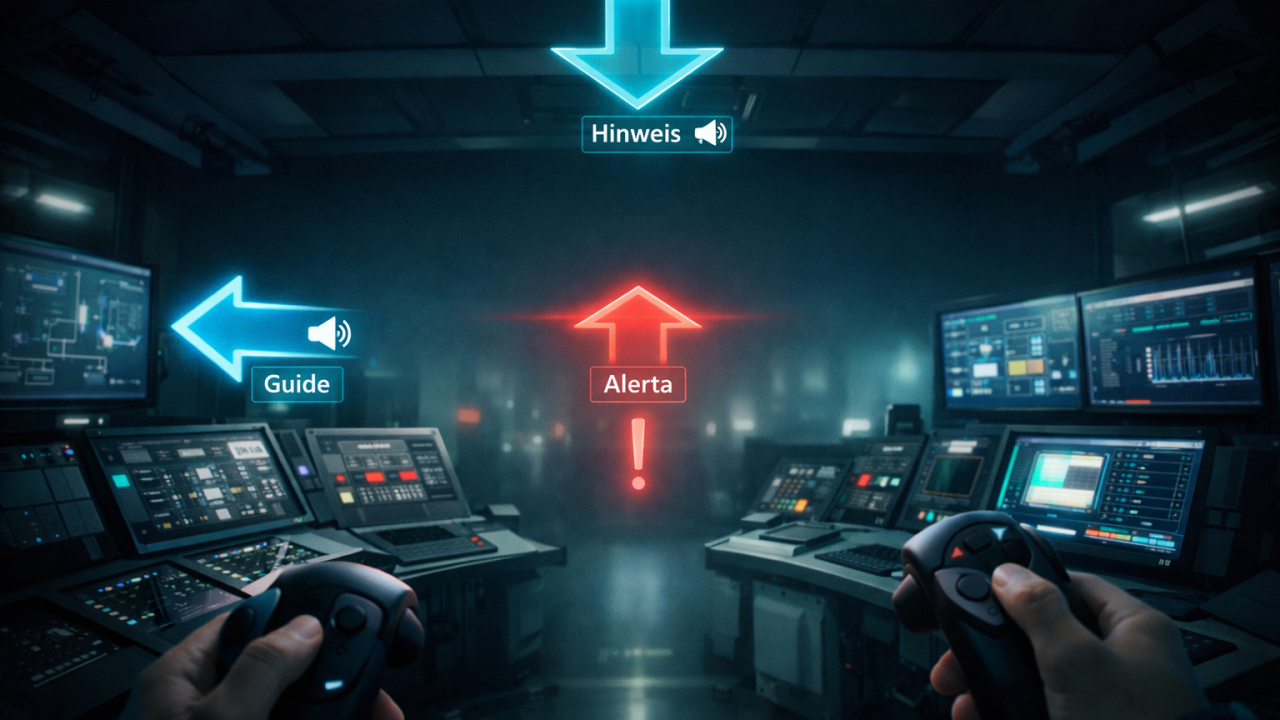
In a 360-degree world, learning is no longer limited to screens, subtitles, or static translations. In VR environments, text floats in space, voices come from direction, and meaning changes based on user movement.
This shift introduces a new concept called spatial localization, where translation is no longer just about language—but about position, sound, and interaction inside a virtual environment.
At WordPar, we are already working on VR training localization for global enterprises, helping companies adapt immersive learning experiences for multilingual workforces. What we are seeing is clear: traditional subtitling is no longer enough.
What Is Spatial Localization?
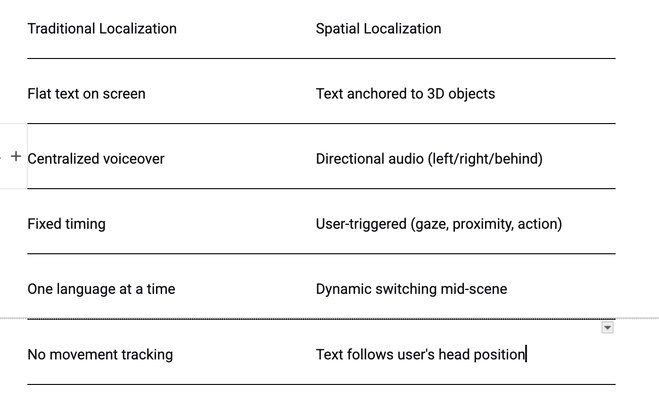
Spatial localization is the process of adapting language inside a 3D environment where placement, direction, and interaction matter as much as words.
Unlike traditional translation, spatial localization considers:
- Where text appears in VR space
- How voice sounds based on direction
- How users interact with objects
- How timing changes based on user movement
In VR training environments, even a simple instruction like “Check the pressure gauge” behaves differently depending on where the user is looking and how the environment is designed.
This is why VR training localization is becoming a critical part of global learning systems.
Why Spatial Localization Is Not Just Subtitles
Traditional subtitles assume a flat screen and a fixed viewing experience. But VR breaks that model completely.
In spatial environments:
- Text is attached to objects, not screens
- Audio direction changes meaning and urgency
- User movement changes timing and experience
For example, in a safety training simulation, an instruction placed near a valve feels more natural than floating text in mid-air. However, languages like German or Dutch expand text length, making placement more complex.
This is where spatial text anchoring becomes essential in modern VR training localization systems.
The 3 Pillars of Spatial Localization (WordPar Framework)
1. Spatial Text Anchoring
In VR environments, text must be attached to physical or virtual objects instead of floating independently.
Languages such as German and Dutch often expand text length by 30–40%, which can break visual layouts if not handled correctly.
That is why spatial localization systems must consider:
- Available surface area in the 3D environment
- User viewing distance
- Head movement and perspective
This ensures translation fits the environment instead of breaking immersion.
2. Directional Voiceover (3D Audio)
In VR, sound direction changes meaning.
A voice coming from behind feels urgent, while a voice from the left feels instructional. The same sentence can feel completely different based on audio direction.
Most traditional localization uses flat audio tracks, but VR requires directional voiceover.
This includes:
- Left channel for guidance
- Right channel for secondary information
- Rear channel for alerts
- Overhead channel for announcements
In advanced VR training localization, even cultural sensitivity matters. For example, direct rear audio may feel too aggressive in some cultures, requiring adjustment in spatial placement.
3. Trigger-Based Localization
Unlike traditional video, VR is not time-based—it is user-driven.
This creates a need for trigger-based systems in spatial localization, such as:
- Gaze triggers (when a user looks at an object)
- Proximity triggers (when a user moves closer)
- Action triggers (when a user interacts with equipment)
Instead of translating a fixed timeline, content is translated based on interaction.
This makes VR training localization far more dynamic and personalized than traditional e-learning.
Real-World Example: VR Fire Drill Localization
A global manufacturing company with 50,000 employees needed a VR fire drill system across 12 languages.
The challenge was not just translation—it was spatial behavior.
- German text expanded and required repositioning
- Japanese audio needed different pacing
- Arabic required right-to-left directional adjustment
- Audio timing varied based on trigger interaction
Despite these complexities, the system was successfully deployed with synchronized multilingual VR environments.
Results:
- 12 languages launched simultaneously
- Zero motion sickness reports
- 94% certification success rate
This shows how spatial localization directly impacts learning effectiveness in immersive environments.
Why 2026 Is a Turning Point for VR Training
The demand for immersive learning is growing rapidly:
- Corporate VR training is growing at 35% CAGR
- More than 50% of enterprises plan VR learning adoption
- Yet only a small percentage have a VR localization strategy
This gap highlights a major problem: most localization providers still think in 2D, not 3D.
Modern VR training localization requires:
- Unity and Unreal Engine integration
- Dynamic text rendering
- Spatial audio mapping
- Real-time interaction-based translation
Without these capabilities, immersive learning fails at scale.
WordPar’s Approach to Spatial Localization
At WordPar, we build localization systems designed specifically for immersive environments.
Our spatial localization capabilities include:
- Spatial text anchoring inside 3D environments
- Directional voiceover recording for immersive audio
- Trigger-based localization for interactive learning
- Unity and Unreal Engine integration support
- Handling RTL languages and text expansion challenges
We do not treat VR as video with subtitles.
We treat it as a living environment where language behaves dynamically.
Conclusion: The Future of Learning Is Spatial
The future of corporate training, education, and simulation is not flat—it is spatial.
Spatial localization is redefining how people experience language inside immersive environments. It is no longer about translating words—it is about translating experience.
As VR becomes mainstream in enterprise learning, companies that invest early in advanced VR training localization will have a significant advantage in engagement, accuracy, and user performance.
At WordPar, we believe one simple principle:
We don’t just translate VR. We localize reality.